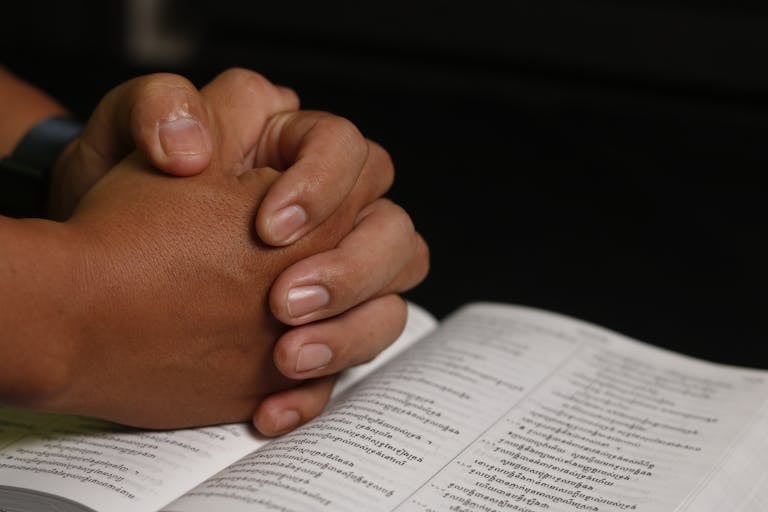
Learn how praying Paul’s words in Ephesians 1 each day can open the eyes of your heart to your calling, your inheritance and your place in Christ Jesus.
Have you ever read a verse many times and still felt it never quite reached you? You agree with it on Sunday, and by Monday morning the pressure of life seems louder than the promise. Many believers know that feeling.
Paul understood it. In Ephesians 1 he prays for Christians who were already saved, and what he asks for is not a new status but new sight. He wants them to see what is already theirs in Christ.
In this post you will see what Paul asked for, why seeing comes before striving, how to pray the passage for yourself without it becoming empty routine, and how to act on what you see. Before you go on, read Ephesians 1:16–23 slowly.
1. Start with the Word, not with your feelings
It is easy to start from how we feel, from our past, or from what someone once told us. Scripture invites a different starting point. “The entrance of Your words gives light” (Psalm 119:130).
Think of a GPS. Before it can guide you anywhere, it has to locate you. The Word does that for your spirit: it tells you where you stand in Christ.
Try this: Before you check your phone tomorrow, read Ephesians 1:16–23 aloud, once, unhurried.
2. Paul prayed for believers to see, not to start
Paul wrote “to the saints” who were “faithful in Christ Jesus” (Ephesians 1:1). These people were already in the family. Yet he kept praying for them, “do not cease to give thanks for you” (1:16), asking that God would give them “the spirit of wisdom and revelation in the knowledge of Him” (1:17).
Notice what he did not lead with: money, easier circumstances or the end of every trouble. God cares about those things. But Paul’s first request was for light.
Imagine inheriting a house and never opening the front door. You own it, yet you live on the porch. The word “revelation” (Greek apokalypsis) means an unveiling, like a curtain pulled back.
The NKJV says “the eyes of your understanding.” The ESV and NIV say “the eyes of your heart” (1:18). The heart in Scripture is the inner person, where we think, choose and trust. Head knowledge can quote a verse. Heart knowledge can stand on it when pressure comes.
3. Three things Paul wants you to know
Paul names three things (Ephesians 1:18–19):
- The hope of His calling. Biblical hope is confident expectation, not wishful thinking. God has called you into His life and purpose, not only away from sin.
- The riches of the glory of His inheritance in the saints. God Himself treasures His people. He sees the church as joined to the risen Christ.
- The exceeding greatness of His power toward us who believe. This power is directed toward believers, not only toward prophets and apostles of long ago.
It is like a bank account you never knew about: the money was always there, but you could not use it.
4. The Christ who is seated far above
Paul then shows how great that power is. It is “according to the working of His mighty power which He worked in Christ when He raised Him from the dead” (1:19–20). So the measure of God’s power toward you is not your mood or circumstances. It is the empty tomb.
God seated Christ at His right hand, “far above all principality and power and might and dominion, and every name that is named” (1:20–21). He “put all things under His feet” and made Him “head over all things to the church, which is His body” (1:22–23). Colossians 2:15 adds that Christ disarmed the rulers and authorities and made a public spectacle of them.
Think of a head and a body. If the head tells the hand to pick up a book, the hand does it. Jesus is the head, and the church is His body in the earth.
A note on what this does not mean: Believers are not Christ, not Lord, and not to be worshiped. Jesus alone is head. The church shares in His victory through union with Him.
5. Make Paul’s prayer your own
Where Paul says “you,” you can say “me.” You are not rewriting Scripture. You are applying it, because this prayer was written for believers, and you are one. You might pray: Father, give me the spirit of wisdom and revelation in the knowledge of You. Enlighten the eyes of my heart, that I may know the hope of Your calling, the riches of Your inheritance, and the greatness of Your power toward me.
Is that not just repetition? Jesus warned against “vain repetitions” (Matthew 6:7), which means words with no heart behind them. Praying Scripture in faith is closer to meditation. God told Joshua that the Book of the Law should not depart from his mouth, and that he should meditate in it “day and night” (Joshua 1:8). The Hebrew word (hagah) carries the sense of murmuring or muttering, so Bible meditation can involve your voice. Paul adds, “faith comes by hearing” (Romans 10:17), and your own ears need to hear your own mouth agree with God.
| When | How |
|---|---|
| Morning | Pray Ephesians 1:16–19 aloud, slowly |
| Afternoon | Pause for a few minutes and repeat one phrase |
| Night | Pray it again, then thank God for what He is showing you |
Where believers differ: Christians from many traditions pray Scripture back to God. Some caution that spoken prayers or confessions can drift into a technique for getting results. The view here is that praying God’s Word is asking and trusting, never commanding God or forcing His hand.
6. Raised and seated with Christ
Ephesians 2 brings this home. “But God, who is rich in mercy” made us alive together with Christ, “raised us up together,” and “made us sit together in the heavenly places in Christ Jesus” (2:4–6). In Greek, each of these verbs begins with the little prefix syn-, meaning “with.” What happened to Christ is shared with those who are in Him.
Picture a head in one chair and a body in another. They do not live apart. If the head is seated above, the body shares that victory.
Many believers stop at the cross, and the cross is never small. Without His blood, there is no forgiveness. But Scripture also says we were raised and seated with Him. Agreeing with God about that is not pride. It is faith.
Where believers differ: The verbs are in the past tense. This teaching reads them as a present spiritual position in Christ. Others stress “already, but not yet,” seeing the fullness as still to come. Both views hold that Jesus is Lord and that our standing is a gift of grace.
7. Authority is delegated, not manufactured
Jesus said, “I give you the authority to trample on serpents and scorpions, and over all the power of the enemy” (Luke 10:19, ESV). The King James uses “power” twice, but the Greek has two words. The first, exousia, means authority. The second, dynamis, means ability or force. Jesus does not say the enemy has no power. He says believers have authority over it in His name.
Authority is delegated power. A traffic officer can stop a heavy truck by raising a hand. He does not do it by muscle. He does it because the government stands behind his badge. In the same way, Jesus said, “All authority has been given to Me in heaven and on earth. Go therefore” (Matthew 28:18–19). The word “therefore” matters: the head sends His body.
We depend on God, yet dependence is not passivity. The officer must still lift his hand. And do not fear the devil. Fear makes us talk as if we were under something Christ has already put under His feet.
8. Put it into practice, and stand
Knowledge helps only when acted on. The teaching offers these examples of answering in Jesus’ name, in agreement with Scripture:
- Fear: “Resist the devil and he will flee from you” (James 4:7). Refuse the lie and stand in Christ’s victory.
- Oppression: God “delivered us from the power of darkness” (Colossians 1:13).
- Condemnation: “There is therefore now no condemnation to those who are in Christ Jesus” (Romans 8:1).
- Sickness: Do not deny the attack, but do not agree that it owns you. Stand on Scripture (Isaiah 53:5; 1 Peter 2:24). Faith and wise medical care belong together, so keep seeing your doctor.
- Your household: Pray in faith for loved ones to be freed from spiritual blindness. You cannot force anyone’s will, and you never command God.
Where believers differ: Jesus said, “Whatever you bind on earth will be bound in heaven” (Matthew 18:18). Some read this mainly as church discipline and agreement in prayer (see 18:15–20). Others apply it more widely to spiritual warfare. The view taken here is that heaven backs believers who act in line with God’s Word. The same letter that seats us with Christ also calls us to stand. Paul begins that call with, “Finally, my brethren, be strong in the Lord and in the power of His might” (Ephesians 6:10). Read on in Ephesians 6 and see how the same Spirit who opened our eyes now equips us to hold our ground.
Questions to Reflect On
- Head: Where have I settled for knowing about Ephesians 1:18–19 without letting it shape how I see myself in Christ?
- Heart: Where have I been speaking as though something is above me that Ephesians 1:21–22 says is under Christ’s feet?
- Heart: Where have I stopped at the cross and not yet believed that I was raised and seated with Him (Ephesians 2:6)?
- Action: What three times this week will I pray Ephesians 1:16–19 for myself, aloud and unhurried, and whom will I invite to join me?
A Prayer
Father, thank You for Your Word, which gives light. Give me the spirit of wisdom and revelation in the knowledge of You, and enlighten the eyes of my heart. Help me to know the hope of Your calling, the riches of Your inheritance, and the greatness of Your power toward me. Keep me humble, keep me trusting You, and teach me to stand in the victory of Jesus Christ. In His name I pray, amen.